B2B E-commerce Solutions set the stage for this enthralling narrative, offering readers a glimpse into a story that is rich in detail and brimming with originality from the outset. As we delve into the world of B2B E-commerce Solutions, we uncover a realm of possibilities and opportunities that pave the way for business success in the digital age.
In this exploration, we will unravel the key components, benefits, challenges, and future trends of B2B E-commerce Solutions, shedding light on how businesses can leverage these innovative solutions to thrive in today’s competitive market landscape.
Introduction to B2B E-commerce Solutions

B2B E-commerce Solutions refer to online platforms or software that facilitate transactions between businesses. These solutions streamline the buying and selling process, enabling businesses to conduct trade electronically.
Importance of B2B E-commerce Solutions
B2B E-commerce Solutions play a crucial role in enhancing efficiency, reducing costs, and improving communication between businesses. By digitizing the procurement process, companies can automate tasks, eliminate manual errors, and accelerate transactions.
- Increased Efficiency: B2B E-commerce Solutions enable businesses to process orders faster, track inventory in real-time, and manage customer relationships more effectively.
- Cost Savings: By moving transactions online, companies can reduce paperwork, lower operational costs, and negotiate better deals with suppliers.
- Improved Communication: These solutions provide a centralized platform for businesses to communicate with partners, suppliers, and customers, leading to better collaboration and transparency.
Examples of Industries Benefiting from B2B E-commerce Solutions
Various industries have embraced B2B E-commerce Solutions to streamline their operations and stay competitive in the digital marketplace.
- Manufacturing: Companies in the manufacturing sector use B2B E-commerce Solutions to manage complex supply chains, source raw materials, and distribute finished products efficiently.
- Wholesale and Distribution: Wholesale and distribution businesses leverage these solutions to automate order processing, optimize inventory management, and expand their reach to new markets.
- Healthcare: The healthcare industry adopts B2B E-commerce Solutions to streamline procurement processes, source medical supplies, and enhance collaboration between healthcare providers.
Key Features of B2B E-commerce Solutions
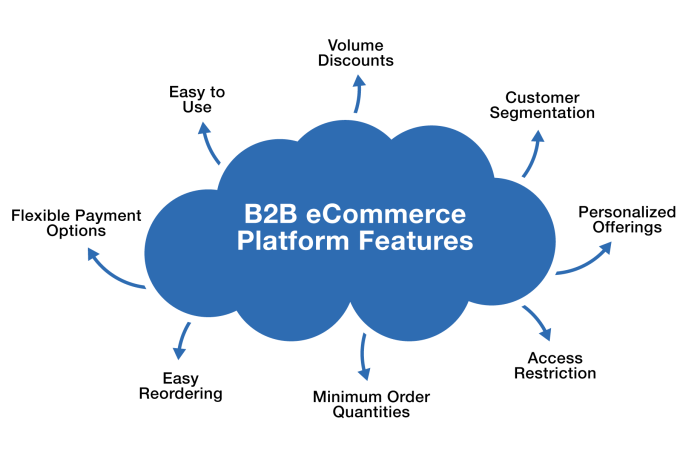
B2B E-commerce Solutions come with a range of features designed to meet the specific needs of businesses engaging in business-to-business transactions. These features play a crucial role in enhancing efficiency, improving customer experience, and streamlining operations.
Essential Features of B2B E-commerce Solutions:
- Custom Pricing: B2B platforms allow businesses to set custom pricing based on factors such as order volume, customer type, or contract terms.
- Integration Capabilities: Seamless integration with existing ERP systems, CRM software, inventory management tools, and other business applications.
- Multiple Payment Options: Support for various payment methods like purchase orders, credit terms, ACH transfers, and online payments.
- Advanced Catalog Management: Ability to manage complex product catalogs, including bulk ordering, tiered pricing, and product variants.
Comparison with B2C E-commerce Solutions:
- Target Audience: B2B E-commerce focuses on selling products or services to other businesses, while B2C E-commerce targets individual consumers.
- Purchasing Process: B2B transactions often involve negotiation, bulk orders, and longer sales cycles compared to B2C transactions.
- Personalization: B2B platforms offer personalized pricing, catalogs, and account management tailored to individual business customers.
Streamlining Business Processes:
- Automation: B2B E-commerce Solutions automate repetitive tasks like order processing, invoicing, and inventory management, reducing manual errors and saving time.
- Efficient Communication: Centralized platforms enable effective communication between buyers and sellers, improving collaboration and transparency.
- Data Analytics: B2B platforms provide valuable insights through analytics tools, helping businesses make informed decisions and optimize their operations.
Benefits of Implementing B2B E-commerce Solutions
Implementing B2B E-commerce Solutions offers a wide range of benefits for businesses looking to streamline their operations, improve efficiency, and enhance customer relationships.
Increased Efficiency and Cost Savings
- Automation of processes such as order management, invoicing, and inventory control leads to reduced manual errors and labor costs.
- Streamlined procurement processes help in faster order processing and delivery, resulting in cost savings and improved operational efficiency.
Enhanced Customer Experience
- 24/7 accessibility allows customers to place orders at their convenience, leading to improved customer satisfaction and loyalty.
- Personalized account management and customized pricing options can be offered to individual customers, enhancing the overall customer experience.
Improved Customer Relationships
- Real-time access to product information, order status, and account details fosters transparency and trust with customers.
- Quick response to inquiries and efficient communication through the platform helps in building strong relationships with customers.
Case Studies
Company XYZ saw a 30% increase in sales within the first year of implementing a B2B E-commerce Solution, thanks to improved order processing and customer engagement.
Company ABC reduced their order processing time by 50% after integrating a B2B E-commerce Solution, resulting in higher customer satisfaction levels.
Implementation and Integration of B2B E-commerce Solutions
Implementing and integrating B2B E-commerce Solutions can be a game-changer for businesses looking to streamline their operations and enhance customer experience. Here are some key steps, challenges, and tips to consider:
Steps to Implement B2B E-commerce Solutions Effectively
- Conduct a thorough analysis of your current business processes and identify areas where B2B E-commerce Solutions can add value.
- Choose a reliable E-commerce platform that meets your business requirements and can seamlessly integrate with your existing systems.
- Customize the platform to align with your branding, product catalog, pricing structures, and customer segmentation.
- Train your staff on using the new system effectively to ensure a smooth transition and optimal utilization of the E-commerce solutions.
- Regularly monitor and evaluate the performance of the E-commerce platform to make necessary adjustments and improvements.
Challenges Businesses May Face When Integrating B2B E-commerce Solutions
- Legacy Systems Integration: Compatibility issues with existing systems can hinder the seamless integration of B2B E-commerce Solutions.
- Data Security Concerns: Ensuring the protection of sensitive business and customer data during integration is a critical challenge.
- User Adoption: Resistance from employees to adapt to new technologies and processes can impede successful integration.
- Scalability: Ensuring that the E-commerce solutions can scale with the growth of the business without disruptions is a common challenge.
Tips for Seamless Integration with Existing Systems
- Collaborate with experienced E-commerce solution providers who have a proven track record in integration projects.
- Develop a comprehensive integration plan with clear timelines, milestones, and responsibilities for all stakeholders involved.
- Regularly communicate with employees about the benefits of the new system and provide training and support to facilitate smooth adoption.
- Conduct thorough testing and quality assurance to identify and resolve any integration issues before the full deployment.
- Maintain regular updates and upgrades to ensure the continuous improvement and optimization of the integrated E-commerce solutions.
Trends in B2B E-commerce Solutions
The landscape of B2B E-commerce Solutions is constantly evolving, driven by technological advancements and changing market demands. Let’s delve into some of the current trends shaping the B2B E-commerce Solutions industry.
Impact of AI and Machine Learning
Artificial Intelligence (AI) and Machine Learning have revolutionized the B2B E-commerce landscape by enhancing customer experience, optimizing operations, and enabling personalized recommendations. AI-powered chatbots provide instant customer support, while machine learning algorithms analyze data to predict buying patterns and improve inventory management. The integration of AI and machine learning in B2B E-commerce Solutions is streamlining processes and driving efficiency.
Future Prospects of B2B E-commerce Solutions
Looking ahead, the future of B2B E-commerce Solutions is promising. As technology continues to advance, we can expect increased automation, seamless integration with other business systems, and enhanced data analytics capabilities. The adoption of omnichannel strategies and the rise of mobile commerce are also anticipated trends that will shape the future of B2B E-commerce Solutions. Businesses that embrace these trends and technologies are likely to stay ahead in the competitive B2B E-commerce market.
In conclusion, B2B E-commerce Solutions emerge as a transformative force in the realm of digital commerce, offering businesses a strategic advantage in reaching new heights of success. With the right implementation and integration strategies, companies can harness the power of B2B E-commerce Solutions to enhance efficiency, boost profitability, and foster stronger customer relationships. As we look towards the future, the evolving landscape of B2B E-commerce Solutions promises continued innovation and growth, shaping the way businesses connect, collaborate, and compete in the global marketplace.
FAQ Explained
What sets B2B E-commerce Solutions apart from B2C solutions?
B2B E-commerce Solutions are tailored for business-to-business transactions, focusing on bulk orders, negotiated pricing, and complex purchasing workflows, whereas B2C solutions cater to individual consumers with simpler buying processes.
How can B2B E-commerce Solutions enhance customer relationships?
By providing personalized experiences, streamlined ordering processes, and real-time communication channels, B2B E-commerce Solutions can strengthen customer connections, foster loyalty, and drive repeat business.
What are the key challenges businesses face when integrating B2B E-commerce Solutions?
Some common challenges include system compatibility issues, data migration complexities, resistance from traditional sales channels, and ensuring seamless integration with existing enterprise systems.


