
In the realm of online retail, AI-Powered E-commerce Solutions are reshaping the landscape with cutting-edge technology. Dive into a world where artificial intelligence drives personalized experiences and transforms customer support, all to enhance the way we shop online.
Explore the ways AI is revolutionizing e-commerce, from personalized product recommendations to streamlining supply chain management, and discover the future of online shopping.
Introduction to AI-Powered E-commerce Solutions
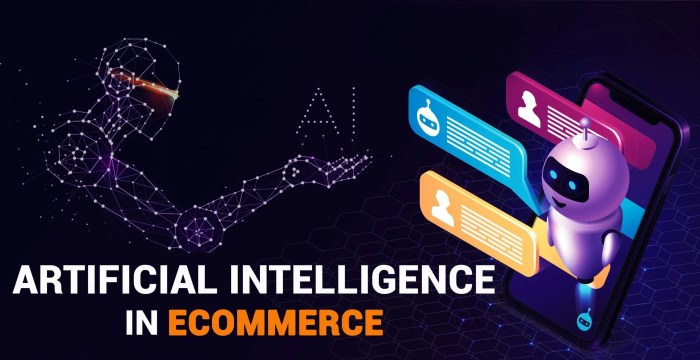
AI-powered e-commerce solutions refer to the integration of artificial intelligence technology in online shopping platforms to enhance various aspects of the shopping experience. By leveraging AI algorithms and machine learning capabilities, e-commerce businesses can optimize operations, personalize recommendations, and improve customer engagement.
Key Benefits of Incorporating AI in E-commerce Platforms
- Enhanced Personalization: AI enables e-commerce platforms to analyze customer data and behavior to provide personalized product recommendations, offers, and shopping experiences.
- Improved Customer Service: Chatbots powered by AI can offer real-time assistance to customers, addressing queries, resolving issues, and providing support 24/7.
- Optimized Inventory Management: AI algorithms can predict demand, optimize pricing, and manage inventory effectively, reducing costs and minimizing stockouts.
- Fraud Detection and Prevention: AI algorithms can detect fraudulent activities, secure payment transactions, and protect customer data, ensuring a safe and secure shopping environment.
How AI Enhances User Experience in Online Shopping
AI enhances user experience in online shopping by:
- Personalizing Recommendations: AI analyzes user behavior and preferences to offer personalized product recommendations, improving the relevance of search results.
- Streamlining Search Processes: AI-powered search algorithms can understand natural language queries, provide relevant results, and offer autocomplete suggestions, simplifying the search process for users.
- Enhancing Visual Search: AI technology enables visual search capabilities, allowing users to search for products using images, making the shopping experience more intuitive and convenient.
- Optimizing Pricing Strategies: AI algorithms analyze market trends, competitor pricing, and customer data to optimize pricing strategies, offering dynamic pricing and personalized discounts to users.
AI-Powered Personalization in E-commerce
AI technology has revolutionized the way e-commerce platforms interact with customers by offering personalized experiences tailored to individual preferences. By leveraging AI algorithms, e-commerce businesses can provide customized product recommendations, personalized marketing strategies, and enhance overall customer satisfaction and retention.
Utilization of AI for Personalized Product Recommendations
AI algorithms analyze customer behavior, preferences, and past interactions with the platform to generate personalized product recommendations. By collecting and processing data in real-time, AI can suggest products that align with the customer’s interests, leading to increased engagement and higher conversion rates.
Examples of AI-Driven Personalized Marketing Strategies
- Dynamic Pricing: AI can adjust product prices based on demand, competitor pricing, and customer behavior to maximize sales and profits.
- Personalized Email Campaigns: AI can send targeted emails with personalized product recommendations, promotions, and discounts based on customer preferences and purchase history.
- Chatbots: AI-powered chatbots can provide personalized assistance to customers, answer queries, and guide them through the purchasing process, enhancing the overall shopping experience.
Impact of Personalized Experiences on Customer Satisfaction and Retention
Personalized experiences play a crucial role in enhancing customer satisfaction and retention in e-commerce. By offering tailored recommendations, promotions, and assistance, businesses can build stronger relationships with customers, increase loyalty, and drive repeat purchases. Studies have shown that personalized experiences can lead to higher customer satisfaction rates, improved brand loyalty, and increased revenue for e-commerce businesses.
AI-Driven Customer Support in E-commerce
AI chatbots have revolutionized customer service in the realm of online retail, providing instant and personalized assistance to shoppers round the clock. These AI-powered tools are transforming the way businesses interact with customers, offering efficient solutions to queries and enhancing the overall shopping experience.
Examples of AI-powered Customer Support Tools
- Chatbots: These AI-driven virtual assistants can engage with customers in real-time, answering questions, providing product recommendations, and guiding users through the purchase process.
- Virtual Assistants: Voice-activated AI tools like Amazon’s Alexa or Google Assistant can assist customers with shopping tasks, such as adding items to a cart, checking order status, or finding product information.
- Automated Emails: AI algorithms can analyze customer behavior and send personalized emails, such as order confirmations, shipping updates, or product recommendations, based on individual preferences.
Advantages and Challenges of Implementing AI for Customer Service
- Advantages:
- 24/7 Availability: AI chatbots can provide instant support to customers at any time of the day, improving response times and customer satisfaction.
- Cost-Efficiency: Implementing AI-driven customer support can reduce operational costs by automating repetitive tasks and streamlining customer interactions.
- Personalization: AI algorithms can analyze customer data to deliver personalized recommendations and tailored assistance, enhancing the shopping experience.
- Challenges:
- Lack of Human Touch: Despite advances in AI technology, some customers may prefer human interaction for complex issues or emotional support, posing a challenge for fully automated customer service.
- Data Privacy Concerns: Collecting and analyzing customer data for AI algorithms raises privacy concerns and requires businesses to ensure data protection and compliance with regulations.
- Implementation Costs: Integrating AI-powered customer support tools can be costly, requiring initial investments in technology, staff training, and maintenance.
Data Analytics and AI in E-commerce Solutions
AI plays a crucial role in leveraging data analytics for enhancing e-commerce solutions. By analyzing vast amounts of customer data and trends, AI enables online retailers to make informed decisions and improve their overall performance.
Role of AI in Predicting Customer Behavior
AI-powered algorithms can analyze customer behavior patterns, preferences, and purchase history to predict future actions. By understanding customer preferences and tendencies, e-commerce platforms can tailor personalized recommendations and offers, ultimately increasing customer engagement and sales.
Impact of AI-Driven Data Analytics on Decision-Making
AI-driven data analytics provide valuable insights that help online retailers make strategic decisions. By analyzing data on customer behavior, market trends, and sales forecasts, AI empowers businesses to optimize their marketing strategies, inventory management, pricing, and overall customer experience. This data-driven approach leads to more accurate decision-making processes and improved operational efficiency in online retail.
Enhancing Supply Chain Management with AI
AI technology is revolutionizing the way supply chain management operates in the e-commerce sector. By leveraging AI-powered tools, businesses can optimize inventory management and logistics, ultimately improving operational efficiency and customer satisfaction.
Optimizing Inventory Management and Logistics
AI plays a crucial role in streamlining inventory management by analyzing data to predict demand patterns, optimize stocking levels, and reduce excess inventory. Additionally, AI algorithms can enhance logistics operations by identifying the most efficient routes for deliveries, minimizing transportation costs, and ensuring timely order fulfillment.
- AI-powered demand forecasting tools help e-commerce businesses anticipate consumer needs and trends, allowing them to adjust inventory levels accordingly and prevent stockouts or overstock situations.
- By utilizing AI-driven predictive analytics, companies can optimize warehouse operations by determining the best placement of products, reducing picking and packing times, and improving overall supply chain efficiency.
Demand Forecasting and Supply Chain Optimization
AI enables e-commerce companies to forecast demand more accurately by analyzing historical sales data, market trends, and external factors impacting consumer behavior. This proactive approach to demand forecasting helps businesses align their inventory levels with actual customer demand, reducing carrying costs and improving profitability.
- Through AI-driven predictive modeling, businesses can identify demand fluctuations, seasonal trends, and market shifts, allowing them to make informed decisions regarding inventory management, procurement, and production planning.
- AI algorithms can optimize supply chain processes by automating replenishment orders, scheduling deliveries, and dynamically adjusting inventory levels based on real-time demand signals, ultimately enhancing operational efficiency and reducing lead times.
AI Applications Improving Efficiency in E-commerce Supply Chains
There are several AI applications that are transforming supply chain management in the e-commerce industry, leading to increased efficiency and cost savings. These applications include predictive analytics, machine learning algorithms, and robotic process automation, among others.
- AI-powered predictive analytics tools help businesses identify potential supply chain disruptions, such as delays in shipments or production issues, enabling proactive risk management and mitigation strategies.
- Machine learning algorithms can optimize route planning, fleet management, and inventory allocation, leading to reduced transportation costs, improved order accuracy, and enhanced customer satisfaction.
- Robotic process automation (RPA) solutions are being used to automate repetitive tasks in supply chain operations, such as order processing, invoice management, and inventory tracking, freeing up human resources for more strategic activities.
As we wrap up our exploration of AI-Powered E-commerce Solutions, it’s clear that the integration of artificial intelligence is not just a trend but a necessity for businesses looking to thrive in the digital age. Embrace the possibilities AI offers and stay ahead in the competitive e-commerce landscape.
Popular Questions
How can AI enhance user experience in online shopping?
AI can analyze customer preferences and behavior to provide personalized recommendations, streamline the shopping process, and offer efficient customer support, ultimately creating a more seamless and enjoyable shopping experience.
What are the advantages of using AI-driven chatbots in customer service?
AI chatbots can provide instant responses, handle multiple queries simultaneously, offer 24/7 support, reduce response times, and enhance customer satisfaction by providing accurate and efficient solutions.
How does AI optimize inventory management in e-commerce?
AI analyzes data to predict demand, automate inventory replenishment, minimize stockouts, reduce excess inventory, and improve overall supply chain efficiency, leading to cost savings and improved customer service.


